Many individuals make art purchases incorrectly – they purchase a piece that fits their couch, and then, years later, they feel that the room is incomplete. If you want to buy art that really resonates with you, you should start by asking yourself a different question. Instead of asking “does it fit?” ask yourself “why does this matter?” This will completely alter the way you go about building your art collection.
Build A Collecting Thesis Before You Buy Anything
Building an art collection without a thesis is comparable to reading a book put together at random using different chapters from various books. While each chapter may be fascinating, they don’t relate to each other or to you.
Having a collecting thesis doesn’t need to be elaborate. It can be as straightforward as “art created by hand in my home region” or “works that revolve around water, movement, or time.” What it does is give you a filter – a means to enter any gallery or studio and instinctively know if something is meant for you.
Story prevails over color-coordination every time. An artwork that reminds you of your grandmother’s kitchen or one that symbolizes a heritage you wish to embrace will captivate you for years. An item you purchased because it was turquoise and your living room is turquoise will not.
Source Ethically and Understand Provenance
This is where collecting becomes stewardship rather than shopping. When you’re buying work from a living artist, provenance is straightforward – you’re buying directly from the source or through a gallery that represents them. But with regional, historical, or Indigenous art, the chain of custody matters significantly.
Ask galleries direct questions: Does the artist receive a fair percentage of this sale? Is this work authorized and authentic? Is it produced within the community it represents? A reputable gallery won’t hesitate to answer. 77% of high-net-worth collectors surveyed cited supporting living artists and the arts community as a primary motivation for their acquisitions (Art Basel and UBS Survey of Global Collecting). That’s not a niche concern anymore – it’s how serious collectors think.
For those drawn to the bold visual language of Pacific Northwest Indigenous art, it’s worth seeking out art from Haida Gwaii through galleries that work directly with Haida artists. The formline design tradition – built from ovoids, U-shapes, and flowing S-forms – carries centuries of meaning, and acquiring it through the right channels ensures that meaning reaches you intact, and that the community behind it is genuinely supported.
Scale and Visual Weight Are More Important Than Style
People new to collecting art often don’t realize how much a piece’s size influences its impact on a room. A painting that appears powerful on a gallery wall might get lost on a large expanse of empty space in your home. An artwork that seemed unassuming in a studio setting could take over a cozy bedroom.
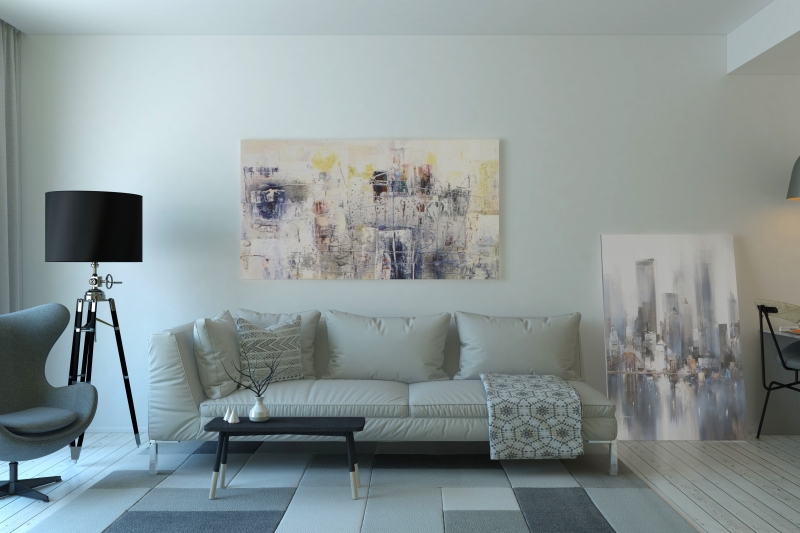
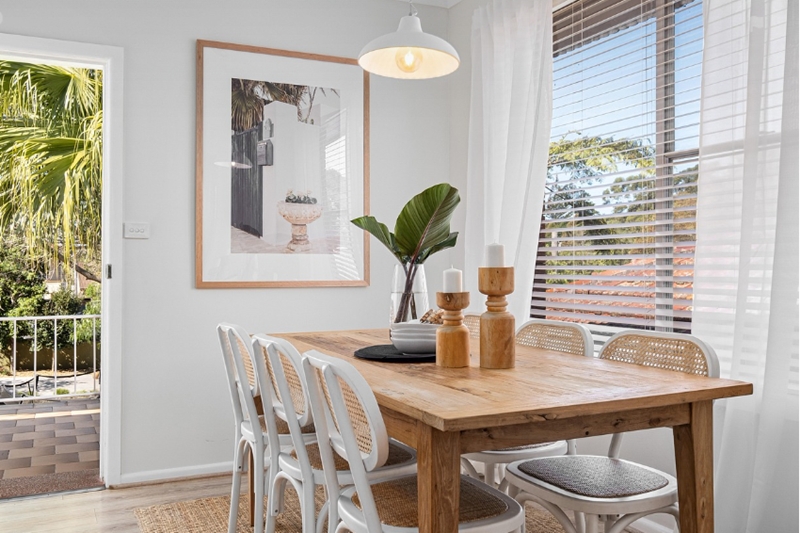
Here’s a good rule of thumb: take measurements of your wall space before you settle on a work of art. A single large piece of artwork mounted above a couch or mantel usually looks more elegant and self-assured compared to several smaller pieces scattered about at varying heights. Visual weight, which describes the feeling you get when a piece of art catches your eye and holds your attention, is determined by both size and composition. Symmetrical and dense compositions send a louder message. Looser, lighter works are quieter. Neither approach is superior, but rather depends on the rest of the room.
Mix Mediums To Create Depth
A flat canvas on a white wall is one-dimensional – in every sense of the term. The most interesting home galleries incorporate paintings or prints with three-dimensional objects: a carved cedar panel, a piece of metalwork, a sculptural textile. Different materials play with light differently. Stone is absorbing. Metal reflects. Wood grain changes as you move around it. Mix two or three materials in a room, and you’ve created a space that rewards repeated viewing – something catches your eye anew depending on the time of day. Limited edition prints are a marvelous way to bring name artists into your home without the price tag associated with originals. Stick to numbered, signed editions with an accompanying document of the official print run. They’re accessible, they retain their value, and they afford younger collections room to play with different styles before making bigger commitments.
Protect What You Collect
Preserving art isn’t a complex science, but it’s easy to put it off until it’s too late. For a work on paper, nothing fades it faster than direct sunlight. So hang them on walls not bathed in southern light, or simply frame with glass that gives you 98% UV protection. As for matting, acid-free is more than a buzzword – it might just save the work you spent all that money on. Standard cardboard mats turn yellow, and eventually that damage turns paper to dust.
For anything with even a modicum of real monetary or emotional value – original work, historical piece, signed edition – the price of professional framing is minimal, the costs of not doing it unknown. A conservator-quality frame will literally outlive the furniture in the room.
The most alive homes do not feel designed. They feel as though every piece was chosen with discernment and as a necessity, regardless of it being potentially photogenic.