Table of Contents
- Common Commercial Roof Issues
- Importance of Regular Maintenance
- Repair vs. Replacement: Making the Right Choice
- Choosing the Right Roofing Contractor
- Cost Considerations in Roof Repair
- Preventive Measures to Extend Roof Lifespan
- Conclusion
For property owners and facility managers, the health of a commercial roof is a critical factor in a building’s overall performance and longevity. Ignoring even minor roof issues can lead to significant expenses and operational disruptions. Regular roof maintenance not only safeguards your investment but also helps your business avoid costly repairs and unsafe conditions. Relying on trusted professionals, like those at Deltaservices.com, ensures your roof receives the expert care it needs to stand the test of time. Commercial roofs are constantly exposed to the elements, making them particularly vulnerable to wear and tear. Whether you manage an office complex, retail center, manufacturing facility, or any other type of commercial property, proactive roof care should be an ongoing priority. Understanding the most common roofing problems and how to address them equips you to make proactive decisions that prevent minor issues from spiraling into major structural headaches.
With informed maintenance strategies, building owners can minimize downtime, lower repair costs, and maintain compliance with safety standards. In fact, the majority of costly commercial roof failures are preventable through scheduled inspections, timely interventions, and sound contractor selection. This guide to commercial roof repair walks you through the most important considerations, giving you the knowledge to protect your property for years to come. For additional industry insights, consider exploring resources from organizations like the FacilitiesNet Roofing Channel, which offers valuable information on best practices for roof maintenance and repair.
Common Commercial Roof Issues
Commercial roofing systems face unique challenges due to their expansive surface area and heavy-duty use. Some of the most frequent problems include:
- Leaks and Moisture: Even small leaks can seep into insulation and framework, leading to mold growth and structural weakness. Early detection is crucial.
- Punctures and Tears: These are often caused by workers servicing rooftop equipment or severe weather conditions. Over time, small punctures can allow water to penetrate the roofing membrane.
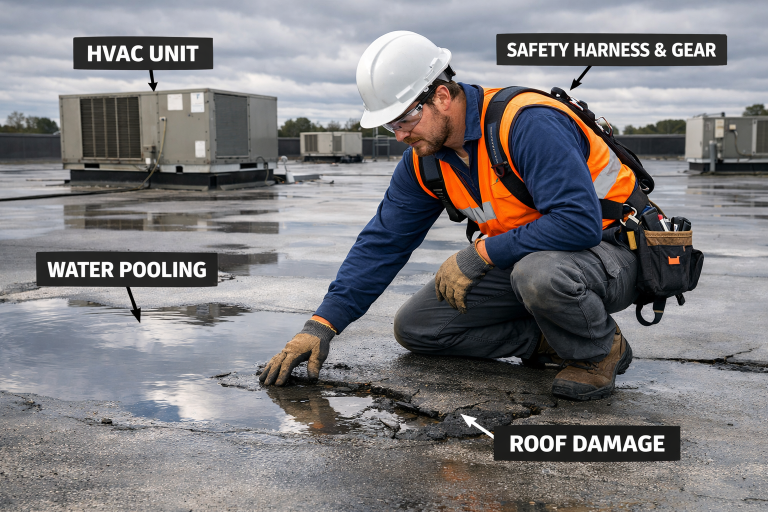
- Ponding Water: Ineffective drainage systems often result in standing water, especially after rainstorms. Persistent ponding accelerates roof deterioration and can result in leaks or even roof collapse.
- Blistering and Cracking: Roof surfaces expand and contract with temperature changes. Over time, this thermal movement can lead to blisters, cracks, and a compromised membrane.
Importance of Regular Maintenance
Routine maintenance is an investment in your property. Scheduled inspections allow professionals to identify and address early signs of damage before they escalate into expensive emergencies. Here are just a few advantages of sticking to a maintenance schedule:
- Extended Roof Lifespan: Consistent care can potentially add years to the usable life of your commercial roof, deferring costly replacements.
- Cost Savings: Tackling problems when they are small and manageable reduces the need for major repairs and helps control operational budgets.
- Compliance: Many roofing warranties, insurance policies, and building codes require proof of regular inspections and maintenance to remain valid.
Repair vs. Replacement: Making the Right Choice
Several variables influence the decision whether to repair or fully replace a commercial roof:
- Age of the Roof: Most commercial roofs have a predictable service life. If your roof is near the end of its lifecycle, replacement may offer better long-term value than ongoing repairs.
- Extent of Damage: Isolated leaks or surface issues generally warrant repairs, while widespread damage, persistent leaks, or structural failures may require total replacement.
- Budget Constraints: While repairs are usually more affordable in the short term, consistent repairs on an old or failing roof might not be cost-effective over time.
Consulting a qualified roofing contractor can help you reach the most cost-effective and reliable decision for your facility.
Choosing the Right Roofing Contractor
The success of any roofing project depends largely on the skill and reliability of the contractor you hire. Here are essential factors to consider:
- Experience and Credentials: Choose contractors with extensive commercial roofing experience and proof of proper licensing and certifications.
- References and Reviews: Look for companies with strong reputations and satisfied clients. Reviewing completed projects gives insight into workmanship and reliability.
- Warranty and Insurance: Confirm that the contractor offers clear warranties on both materials and labor, and has liability insurance to cover any accidents or damage during the repair process. The BuildingGreen website is a helpful resource for learning more about sustainable and well-managed roofing solutions.
Cost Considerations in Roof Repair
Understanding upfront and long-term costs helps you budget wisely for necessary work. Key factors affecting repair costs include:
- Extent of Damage: More severe damage requires extensive materials and labor, increasing overall repair costs.
- Roof Size and Type: Large or complex roofs are more labor-intensive and generally cost more to repair.
- Material Selection: High-quality or innovative materials often have a higher initial cost but provide better performance and longer lifespan.
Request detailed quotes from at least three reputable contractors before making your decision. This not only ensures competitive pricing but also helps clarify the scope of work included in each offer.
Preventive Measures to Extend Roof Lifespan
Regular care and preventive strategies are the best defense against premature roof failure. Consider incorporating these practices into your building maintenance routine:
- Regular Inspections: Schedule inspections at least twice each year and after major storms to detect problems early.
- Prompt Repairs: Act quickly on minor leaks, cracks, or drainage issues to prevent them from growing into much larger issues.
- Proper Drainage: Keep all gutters, downspouts, and internal drains clear of debris to ensure water is effectively directed away from your roof.
- Limit Foot Traffic: Restrict access to authorized personnel only and use walkways or pads to minimize wear from foot traffic on vulnerable areas.
Conclusion
The long-term integrity of your commercial property depends on how well you maintain and repair its roofing system. By understanding common issues, following a consistent maintenance schedule, choosing the right contractors, evaluating repair versus replacement thoughtfully, and using preventive strategies, you can ensure the roof remains strong and reliable for many years. Take the initiative to protect your investment and optimize your building’s performance and safety through expert care and practical planning.