
Table of Contents
- What Is Project-Based Learning?
- Benefits of PBL
- Implementing PBL in the Classroom
- Overcoming Challenges in PBL
- Real-World Examples of PBL
- Conclusion
Project-Based Learning (PBL) is revolutionizing education by transforming passive learners into active problem-solvers. Rather than simply receiving information, students engage with projects that mirror real-life challenges, encouraging deeper exploration and retention of subject matter. This hands-on approach motivates learners and builds relevant skills for life beyond the classroom. For teachers and schools seeking practical strategies to boost motivation and creativity, this dynamic method stands out. Schools like Studentreasures Publishing showcase how integrating student-created books into project-based initiatives can further deepen engagement and bring learning to life.
The strength of PBL lies in its ability to connect lessons directly to the world students live in. By providing authentic tasks, such as developing solutions for their communities or designing products that serve a purpose, educators foster a genuine interest in learning. The result is a classroom environment where curiosity, independence, and collaborative skills flourish. Children not only grasp academic content but also experience success through teamwork and self-directed discovery.
What Is Project-Based Learning?
Project-Based Learning is an instructional strategy that places students at the center of their educational journey. It asks learners to investigate broad, meaningful questions and come up with their own inquiries and solutions. Unlike traditional classroom models where memorization is often the goal, PBL encourages exploration, critical thinking, and reflection. Students work collaboratively to research, analyze, and present on real-world issues, making knowledge acquisition both deep and memorable.
Central to PBL is the belief that learning happens best when students see the relevance of their studies. Authentic projects can range from organizing a local awareness campaign, constructing models using scientific concepts, or mixing literacy with art by publishing their own stories. Teachers play a facilitative role, guiding inquiry without providing step-by-step instructions, so each group or student can discover personal ways to succeed.
Benefits of PBL
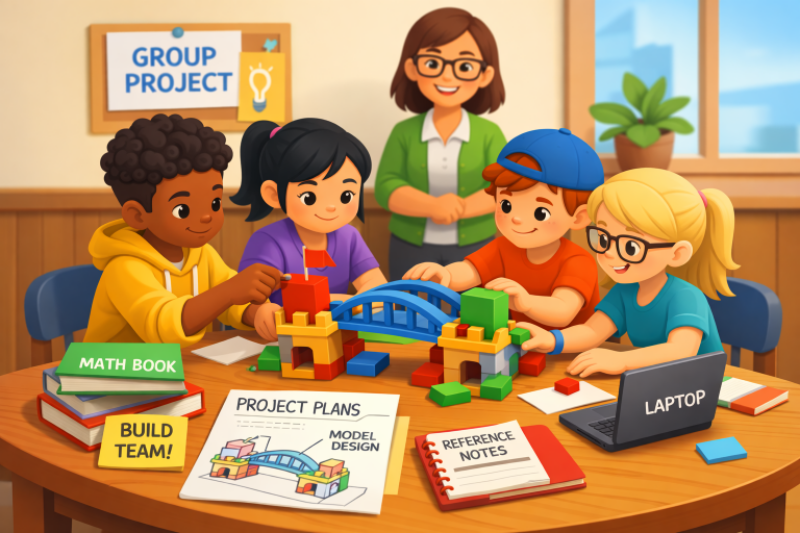
Schools and educators adopting PBL reap an array of advantages for their students:
- Enhanced Engagement: When tasks reflect issues or interests meaningful to students, motivation rises and attention increases in class.
- Deeper Understanding: PBL’s long-form exploration allows time for students to absorb information, draw connections, and build comprehensive knowledge.
- Skill Development: Students practice problem-solving, communicate effectively, and collaborate with peers, all while building resilience and adaptability.
- Improved Retention: Hands-on application solidifies lessons, helping knowledge stick far longer than rote memorization.
Research from Edutopia supports these benefits, noting notable improvements in student achievement and classroom climate when PBL methods are at the forefront. The process of planning, executing, and reflecting on projects also gives students insight into their own learning preferences and strengths.
Implementing PBL in the Classroom
Integrating PBL successfully begins with thoughtful design and structured support. Educators can use this step-by-step approach:
- Identify a Real-World Problem: Connect the subject matter to a community issue, scientific phenomenon, or global challenge that aligns with curriculum standards.
- Plan the Project: Set clear objectives. Detail the timeline, group formation strategies, checkpoints, and required resources so students know what is expected.
- Facilitate Student Inquiry: Encourage learners to ask questions and conduct research independently or in teams. Teachers act as mentors, guiding discussion and critical thinking.
- Assess Progress Formatively: Use observation, journals, and periodic presentations to gauge understanding and offer timely feedback.
- Present Findings: Have students showcase their projects through presentations, reports, or digital portfolios, making communication skills as prominent as problem-solving.
Overcoming Challenges in PBL
Transitioning to PBL can be daunting, especially with packed schedules or resource constraints. However, challenges can be navigated with practical solutions:
- Start Small: Pilot short-term or mini-projects before incorporating larger units to build both student and teacher confidence.
- Collaborate: Partner with colleagues to pool ideas and materials. Online educator communities and organizations can offer templates and project blueprints, helping ease the load.
- Differentiate Instruction: Adapt projects for diverse learners by providing options for topic choice, assessment methods, or team roles. Flexibility ensures everyone is included and challenged at the right level.
With support from school administration and continuous professional development, educators can gradually shift the culture in their classrooms, making PBL a sustainable and effective approach. The Association for Supervision and Curriculum Development (ASCD) provides resources and guidance for educators adopting student-centered teaching models.
Real-World Examples of PBL
Educators across the country and internationally are finding creative ways to anchor learning in authentic experience. In St. Louis, for instance, schools incorporate community projects like garden building or environmental studies, giving children a direct hand in shaping their surroundings and understanding local ecosystems. Nationwide, teachers are integrating PBL into core subjects such as math and science, asking students to solve practical design problems, build scale models, or research social justice topics while developing persuasive arguments.
PBL is particularly successful when it taps into student passion and local context. Urban schools might launch initiatives focused on urban planning or pollution, while rural settings could explore agricultural challenges or conservation. These tailored projects allow students to relate their learning to their everyday lives, deepening both knowledge and ownership of outcomes. The New York Times regularly profiles schools leveraging PBL to tackle meaningful topics, underscoring the approach’s value in fostering civic-mindedness and curiosity.
Conclusion
Project-Based Learning not only brings curriculum to life but also prepares students to thrive in an evolving world. By guiding learners through meaningful inquiry and collaborative projects, educators build a stronger foundation for critical thinking, independence, and lifelong learning. As schools continue to innovate and adapt, PBL stands as a proven pathway to both academic achievement and personal growth.