
Key Takeaways
- A memorable San Diego food day begins with a purpose, not an oversized restaurant list.
- Staying in one main area helps protect your time, appetite, and budget.
- A simple rhythm of a light start, flexible midday meal, and intentional dinner works for most plans.
- Reservations, parking, dietary needs, and group size should shape the itinerary before the day begins.
- Seasonal events and local ingredients can add personality without making the schedule complicated.
San Diego is easy to underestimate when planning a day around food. Coastal neighborhoods, central city districts, and inland communities can each offer a different pace, so the best itinerary is rarely the one with the most stops. Use the Franki app as a starting point for ideas, then narrow your choices based on where you will be, who is joining you, and how much time you want to spend moving between meals. A better food day leaves room for the parts that make San Diego enjoyable: a waterfront walk, a neighborhood market, time on a patio, or an unplanned dessert stop. The goal is not to eat constantly. It is to create a day that feels considered, comfortable, and worth remembering after the last bite.
Why a Food Day Needs More Than a Restaurant List
A list can inspire you, but it cannot account for traffic, parking, opening hours, reservation policies, or whether the group is ready for another full meal. Instead of trying to cover the entire city, choose a handful of stops that fit together. A coffee shop near a walkable district, a casual lunch, and one well-chosen dinner can feel more satisfying than racing across San Diego County for every recommendation. Start with a simple planning order: decide the purpose of the outing, choose one main area, create a loose schedule, and confirm the practical details. This approach works whether you are visiting for a weekend or looking for a fresh way to spend a Saturday close to home.
Step 1: Choose the Purpose of the Day
The occasion should determine the pace. A relaxed afternoon calls for flexible stops and walking breaks, while a celebration may revolve around a dinner reservation and a later dessert or drink. For families, prioritize menus with enough variety, straightforward parking, and realistic wait times. For a date, look for a setting where conversation will be easy. For a food-focused adventure, mix formats, such as a bakery item, shared lunch plates, and a more polished evening meal.
Give Every Stop a Job
- Morning stop: Wake up the day with coffee, tea, a pastry, or a small breakfast.
- Midday stop: Keep lunch casual enough to allow time for exploring nearby streets or attractions.
- Evening stop: Make dinner the anchor for a special occasion, a group gathering, or a slower night out.
You do not need three large meals. Sharing snacks or smaller plates gives everyone more variety and makes it easier to enjoy dinner without feeling rushed or overly full.
Step 2: Pick One Main San Diego Area
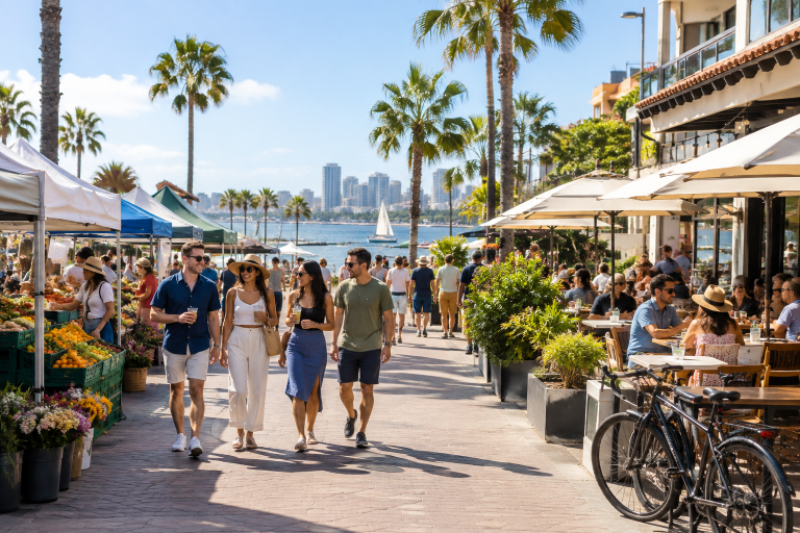
San Diego rewards neighborhood-based planning. A walkable district can make it easy to combine food with browsing, galleries, parks, or an evening stroll. A car-dependent area can still work well, but it needs more buffer time between stops. Before you commit, consider parking availability, rideshare pickup points, and whether an event may make the area busier than usual. Choose the setting that matches the group’s energy. A beach-adjacent outing may suit a leisurely afternoon, while a central neighborhood can be better for diners who want several choices close together. If anyone has mobility considerations, avoid building the day around long walks or hard-to-predict street parking.
Match the Plan to the Season
San Diego’s generally mild conditions make outdoor dining appealing throughout much of the year, but the experience still changes with the season. Warm days can favor patios, cool drinks, seafood, and market visits. A cooler evening may be a better fit for a long dinner, warm drinks, or a tasting-style menu. Food events can also change what is available and how crowded a neighborhood feels. Check seasonal culinary celebrations across the city before finalizing plans, especially if your day falls near a festival, restaurant promotion, or ticketed tasting event. Confirm details directly with the organizer, as dates, hours, and participation may change.
Use Local Ingredients as a Planning Clue
You do not need deep culinary knowledge to make a meal feel more connected to San Diego. Look for menus that call out seasonal produce, regional citrus, avocados, local farms, or seafood. These details can help you choose between otherwise similar restaurants and can give the day a stronger sense of place. A farmers’ market can make a useful first or midday stop, especially when it is close to your next meal. The countywide list of certified farmers’ markets can help you find options by day of the week. Buy something small, such as fruit or a baked item, rather than treating the market as another full meal before a reservation.
Plan Around the Group and Budget
For two people, prioritize comfortable seating and dishes that are easy to share. For families, confirm availability of high chairs, restroom access, kid-friendly options, and expected wait times. Larger groups should reserve early and ask about deposits, fixed menus, service charges, or whether the restaurant can seat everyone together. When dietary needs are involved, read the current menu and contact the restaurant before arrival rather than assuming substitutions will be available. Build a realistic budget that includes food, drinks, transportation, parking, and optional activities. One higher-cost meal is often enough. Keep the earlier stops modest, and leave a small cushion for a spontaneous snack, an extra coffee, or a change in plans.
Use Reservations and Timing Wisely
- Book the main meal first, particularly for dinner or a larger party.
- Plan the first stop around that reservation instead of locking in every hour of the day.
- Allow extra time between locations when driving, parking, or changing neighborhoods.
- Check opening hours and menus on the day of your visit.
- Keep one nearby backup option in case of a long wait, closure, or sudden change of plans.
Common Mistakes to Avoid
- Trying to visit too many neighborhoods in one day.
- Scheduling meals so close together that no one is hungry.
- Ignoring parking, traffic, weather, or event crowds.
- Choosing a restaurant without checking whether it works for the full group.
- Relying on old menus, unconfirmed hours, or outdated event listings.
- Using most of the budget at the first stop.
A Simple San Diego Food Day Framework
Begin with coffee and a light pastry near your chosen area. Spend the late morning at a market, waterfront, park, gallery, or neighborhood shop. Have a casual lunch built around shared plates or seasonal ingredients, then take a genuine break before dinner. Finish with a reservation that suits the day’s purpose, followed by dessert, live music, a scenic walk, or a relaxed drink if everyone still has the energy.
Final Checklist Before Leaving Home
- Confirm the date, hours, reservation time, and cancellation policy.
- Review parking, transit, or rideshare plans.
- Check dietary preferences and accessibility needs with the group.
- Look at the weather if outdoor seating is important.
- Save one backup option nearby.
A great San Diego food day does not require a packed itinerary or a huge budget. Pick a purpose, stay grounded in one area, give meals enough breathing room, and leave space for a pleasant surprise. That balance turns a day of dining into a better way to experience the city.